
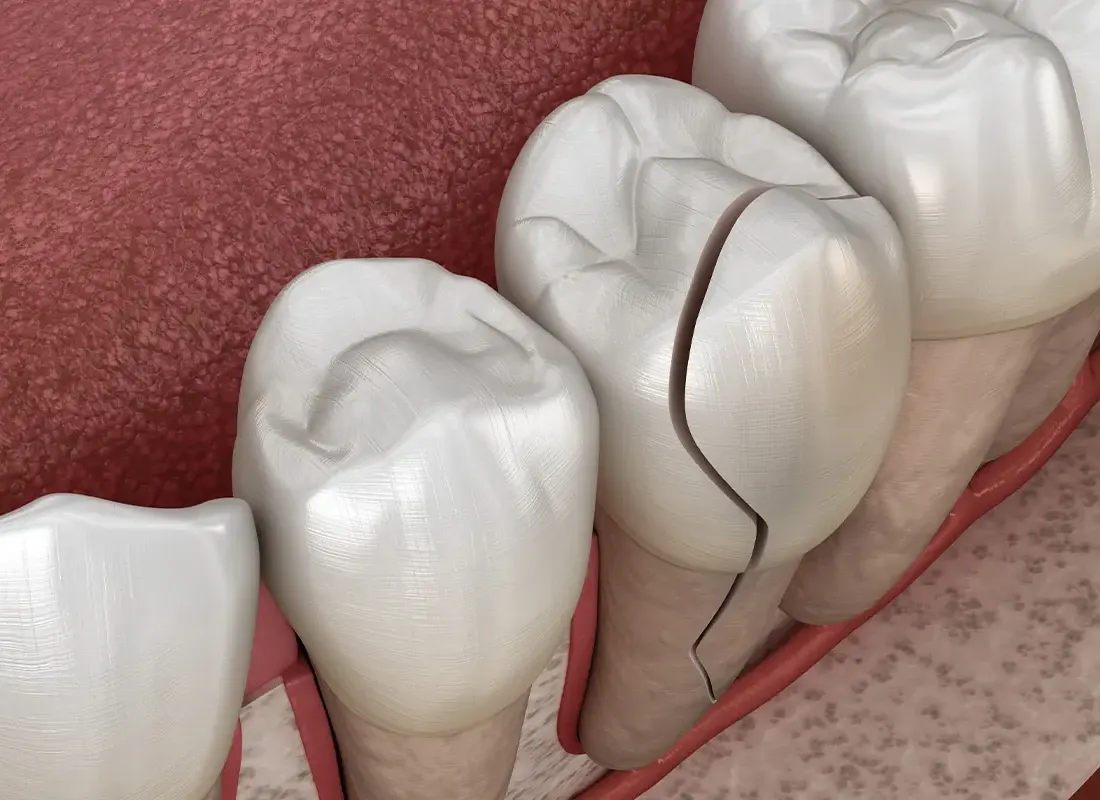
A chipped tooth feels small until the tongue finds the edge, and prompt care helps protect the tooth from further damage.
Bit down on something hard and felt a corner of a tooth give way? Knowing what to do if you chip a tooth keeps a minor break from turning into a bigger problem. A chip can range from a tiny rough spot to a missing corner, and the right response depends on how deep it goes.
An emergency dentist repairs a chip that stays in the enamel very differently from one that reaches the inner tooth. The steps below cover the first 24 hours.
Quick Answer
After chipping a tooth, rinse with warm water, hold a cold compress to the face and save any broken piece in milk or saliva. Call a dentist the same day if there is pain, bleeding or a sharp edge. A fever with facial swelling needs care the same day, and trouble breathing needs the ER.
Key Takeaways
- Rinsing with warm water and applying a cold compress are the first steps after most chips.
- A chip that causes pain, bleeding or a sharp edge deserves attention that same day.
- Keep any broken piece moist in milk or saliva and bring it to the dentist.
- Small chips are often smoothed or rebuilt, while larger breaks may need a full crown.
- Wearing a mouth guard for sports and avoiding ice and hard candy helps prevent many chips.
Is a Chipped Tooth Really an Emergency?
It depends on the chip. A small chip with no pain is not a crisis, but it is still damage, and the edge can cut the tongue, lip or cheek. A chip that exposes the softer layer under the enamel can make the tooth sensitive to hot, cold and sweet foods.
The line between waiting and acting is pain, bleeding or a sharp edge. If you have any of those, call a dentist the same day. If you have none, the chip still needs repair, because a rough or weakened edge can catch and break further.
What Should Be Done in the First Hour?
According to MouthHealthy from the American Dental Association, a cracked tooth should be rinsed right away with warm water to clean the area. A cold compress on the face helps keep swelling down. If the tongue or lip was bitten in the same accident, that spot can be cleaned gently with water and given its own cold compress.
Then comes a phone call. Tell the office how big the chip is, whether it hurts and how it happened, so the staff can plan for your visit.
Should the Broken Piece Be Saved?
Yes, when it can be found. Bring it along in case the dentist can use it in the repair. A small piece is best kept moist in milk or saliva rather than left to dry.
Many chips are rebuilt with tooth-colored material, so a piece that was swallowed or never found does not rule out a rebuild.
What Can Ease Discomfort Until the Visit?
Chewing on the other side of the mouth keeps pressure off the damaged tooth. Soft foods and lukewarm drinks help when the exposed area is sensitive. A cold compress on the cheek can ease swelling near the chip.
Pain relief and any other treatment at home are best discussed with the dental office when you call, since the right choice depends on the chip.
When Does a Chip Call for Urgent Care?
Watch for signs that the chip has reached the inner layers of the tooth. These include pain that lingers or throbs. Bleeding from the tooth or a tooth that feels loose counts too. Pain when biting down or letting go of the bite is another warning.
A pink or red spot in the break can mean the nerve is exposed. Call the office the same day.
Go to the ER or call 911 if swelling spreads toward your eye or neck, you have trouble breathing or swallowing, or bleeding won’t stop. A fever with facial swelling needs care the same day. If a blow to the face caused the chip, the blow may have injured more than the tooth, so take swelling and trouble breathing seriously.
How Is a Chipped Tooth Repaired?
The repair depends on how much of the tooth is damaged. A tiny chip may only need smoothing and polishing. A larger one is often rebuilt with bonding, where tooth-colored material is shaped and hardened onto the tooth. A tooth that has lost a large portion, or that is cracked beneath the chip, may need a crown to hold it together.
If the break reaches the nerve, the tooth may need root canal treatment to stay in the mouth. That is why a chip that hurts should not wait. Enamel does not grow back, so protecting what remains is the goal.
How Do Chips Happen in the First Place?
Many chips come from habits. MouthHealthy lists chewing ice, popcorn kernels and hard candy as common ways to crack a tooth, and it advises using scissors rather than the teeth to cut things open. Sports and recreation add risk, which is why the same source recommends a mouth guard for those activities.
A tooth that chips easily may have damage that cannot be seen, so a dentist’s exam is the way to find out.
Frequently Asked Questions
Can a chipped tooth heal on its own?
A chipped tooth does not repair itself, because enamel does not grow back. A tiny chip may stay painless for a while, but the rough edge can catch and break further. A dentist can smooth, rebuild or cover the tooth, depending on how much of it is missing.
Will a chipped tooth hurt?
It may or may not. A small chip in the enamel often causes no pain, while a chip that exposes the softer layer underneath can make the tooth sensitive to hot, cold and sweet foods. Pain that lingers or throbs, or pain when biting, is a reason to call a dentist the same day.
Can I keep brushing a chipped tooth?
Yes, brushing keeps the area clean, and the tooth still needs daily care. Brush gently around the chip so the toothbrush does not catch the rough edge, and clean between the teeth with care. Mention the chip at the office visit so the dentist can check the area closely.
Related Reading
- Can Bonding Repair a Chipped Tooth in One Appointment?
- What to Do When Your Child Has a Dental Emergency: A Parent’s Guide
If you want to learn more about what to do after a broken tooth, visit our Emergency Dentist in Rancho Santa Margarita, CA, page or schedule a consultation.