
Natural Look
The composite is shade-matched to your tooth, so the repair stays invisible when you speak, laugh, and smile.
Accepting New Patients
Need to fix a cavity without a flash of metal in your smile? Tooth-colored fillings in Rancho Santa Margarita, CA, repair damaged teeth with durable materials that match your natural shade. At Elite Dentistry, Dr. Lari and our skilled team deliver comfortable, long-lasting, beautiful results.
2,500+
Happy Patients
25+ Years
Experience
Same-Day
Emergency Care

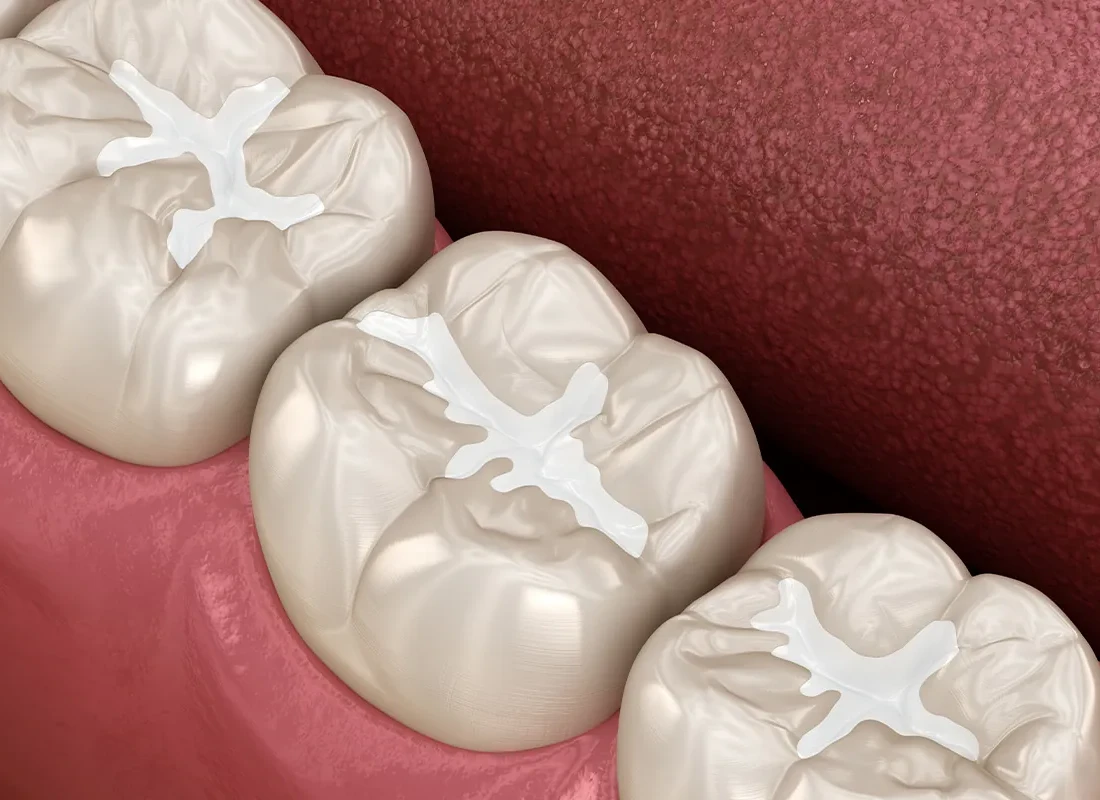
Tooth-colored fillings, also called composite fillings, are made from a blend of safe resin and glass particles that match your natural teeth. Unlike traditional silver amalgam, they bond directly to the tooth, so less healthy structure has to be removed. The result is a repair that stays private while protecting against further decay. They are also mercury-free and can fix chips and worn areas in addition to cavities.
The composite is shade-matched to your tooth, so the repair stays invisible when you speak, laugh, and smile.
Composite bonds right to the tooth, which means less drilling and more of your healthy structure stays intact.
The material forms a tight bond with the tooth, helping block bacteria from sneaking back in around the edges.
Beyond cavities, composite can fix small chips, cracks, and worn spots for a healthier, more even smile.
From your first exam to the final result, here's exactly what to expect — calm, clear, and never rushed.
Request an AppointmentWe use precise digital imaging to assess the cavity and confirm exactly how much of the tooth is affected.
We numb the area so you stay comfortable, then remove decay while preserving as much healthy tooth as possible.
We apply the tooth-colored composite in thin layers, shaping it to match the natural contours of your tooth.
A special light hardens each layer, creating a strong, durable bond with your enamel.
We polish the filling to a smooth, natural finish and check your bite before you leave.
You can see a dark spot, hole, or pit in a tooth that may be the start of decay.
You feel a twinge with hot, cold, or sweet foods, which can point to a cavity.
You have dark metal fillings you would like to replace with a natural-looking option.
You have a small chip, crack, or worn area you want repaired before it grows.
5-star rated dental care from patients like you…
A filling should be quick, comfortable, and invisible, and ours are. Here is why patients trust us to repair their smiles.
Here are just a few reasons our patients love us:

Don't see the answer you're looking for? Call us at (949) 888-8989.
No, we use effective numbing so you should not feel discomfort during treatment. Most patients are surprised by how easy it is.
With proper care, composite fillings usually last between five and ten years. Good home hygiene and regular checkups help them last even longer.
Yes, you can eat and drink as usual once any numbing wears off. It is a good idea to wait on very hot or cold items right after.
For most patients, yes. Composite is metal-free, more natural-looking, and requires less removal of healthy tooth than silver amalgam.
Yes, we shade-match the composite to your natural teeth. The finished filling blends in so well that it is hard to spot.
Cavities do not always announce themselves, but common warning signs include sensitivity to hot, cold, or sweet foods, a persistent toothache, a rough spot you can feel with your tongue, visible pits or dark spots, or food repeatedly getting stuck in one area. That said, early cavities often cause no symptoms at all, which is why routine checkups matter. Dr. Lari uses digital imaging to catch decay before it becomes a bigger problem.
Composite fillings resist staining fairly well, but because the material is slightly more porous than natural enamel, it can gradually pick up discoloration over the years. Frequent coffee, tea, red wine, and tobacco are the most common culprits, and staining tends to show first around the edges of the filling. Keep in mind that whitening products will not lighten composite material. Good oral hygiene, limiting staining habits, and regular visits help keep your fillings looking fresh, and they can be polished or replaced if needed.
Ignoring a cavity rarely ends well, since decay does not reverse on its own. Left untreated, it works deeper into the tooth, eventually reaching the sensitive inner pulp where it can cause significant pain and infection. What might have been a simple filling can progress to needing a root canal, a crown, or even extraction, and an untreated infection can also spread to surrounding tissues. Addressing decay early with a filling protects the tooth and saves you time, discomfort, and expense.
The cost of tooth-colored fillings depends on a few factors, including the scope of your treatment plan and whether additional imaging or procedures are needed. During your visit, we'll walk you through a clear, itemized estimate before anything begins — no surprises. At Elite Dentistry, we work closely with most insurance providers to maximize your benefits, and we offer flexible financing options and new patient specials to make quality care comfortable for every budget.
Do not let a small cavity turn into a big problem. Fill out the form below, and our team will reach out within one business hour to schedule your visit.
 25+ Years of Care
Amalgam A silver-colored filling material that is strong and durable but contains mercury.
Composite Resin A tooth-colored filling material that blends in with your natural teeth.
Gold A highly durable and long-lasting filling material, but it is also the most expensive.
Porcelain (Inlays/Onlays) Custom-made, tooth-colored fillings used for larger cavities.
Cavity Preparation The process of removing decayed tooth structure before placing a filling.
Bonding The process of attaching a filling to the tooth structure.
Curing Light A special light used to harden composite resin fillings.
Etching Applying an acidic solution to prepare the tooth surface for bonding.
Finishing and Polishing Smoothing and shaping the filling to ensure a proper fit and bite.
Caries The technical term for tooth decay or cavities.
Cavity A hole in a tooth caused by decay.
Composite Bonding Using composite resin to repair chipped or cracked teeth.
Indirect Filling A filling that is made in a dental lab and then cemented onto the tooth (e.g., inlays, onlays).
Local Anesthesia Numbing medication used to prevent pain during dental procedures.
Plaque A sticky film of bacteria that constantly forms on teeth and contributes to tooth decay.
Radiopaque Appears white or light gray on an X-ray, indicating denser structures (like fillings).
Restoration A general term for any dental work used to restore the function or appearance of a tooth.
Temporary Filling A filling used to protect a tooth until a permanent filling can be placed.
Tooth Decay The process that occurs when bacteria in your mouth produce acids that eat away at the tooth enamel.