
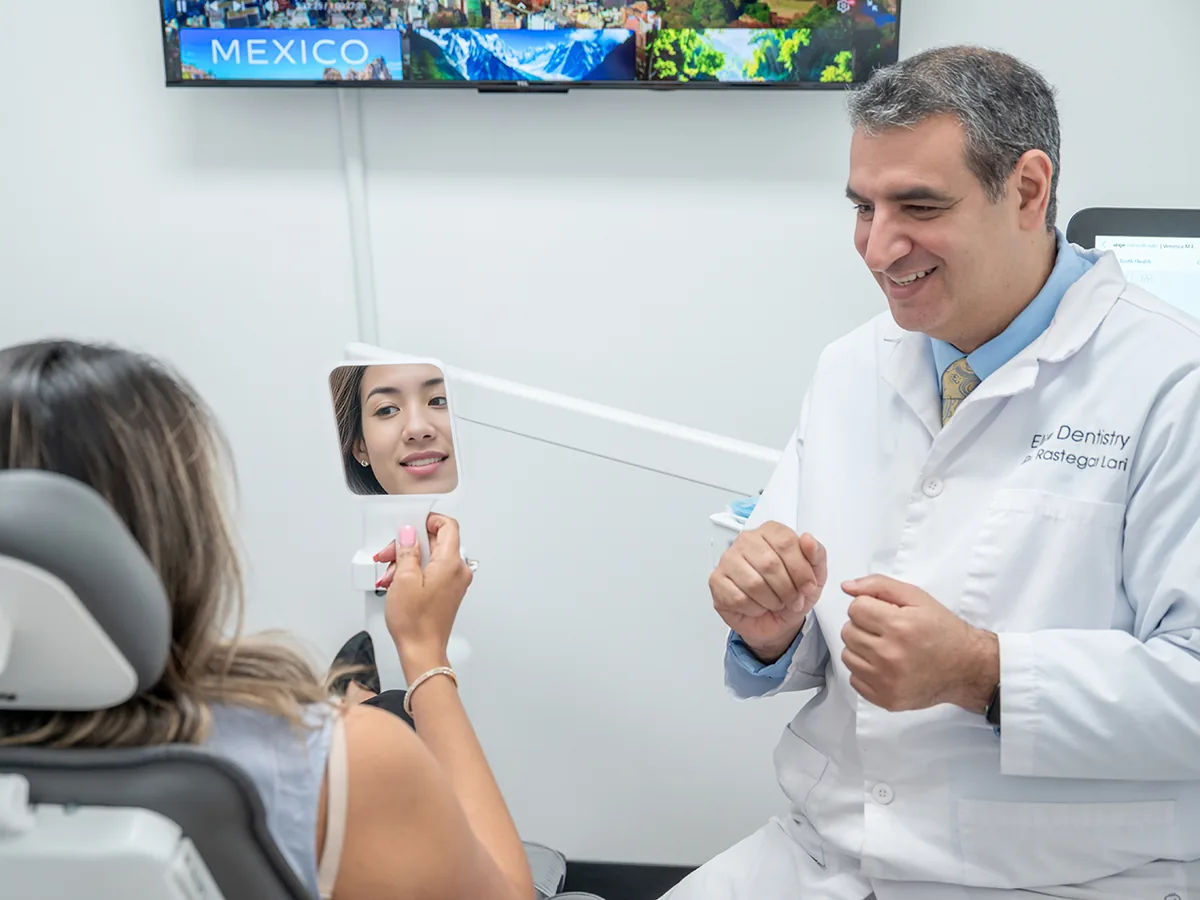
New dentures feel strange at first, but most people adjust within a few weeks.
Wondering what those first few weeks with new teeth will feel like? The adjustment period for new dentures is usually a few weeks of getting used to eating, talking, and the new feel in your mouth. The adjustment period is the stretch of time your cheeks, tongue, and gums spend learning to work with the dentures. A little soreness, extra saliva, and awkward speech are all normal early on, and they fade as you settle in. With a bit of patience, most people find that dentures soon feel like a natural part of daily life.
Key Takeaways
- Most people adjust to new dentures within a few weeks to a couple of months.
- Mild soreness, extra saliva, and awkward speech are normal and temporary at first.
- Start with soft foods in small bites, then work up to firmer textures.
- Reading aloud helps your speech adapt to the new dentures more quickly.
- Follow-up visits let the fit be adjusted so sore spots do not linger.
What Happens During the Adjustment Period?
The first few weeks are all about your mouth learning something new. According to the American Dental Association, new dentures may feel awkward and even loose for a few weeks while the muscles of your cheeks and tongue learn to hold them in place. Minor irritation, sore spots, and a temporary increase in saliva are common and expected. As your mouth adapts, those early problems steadily fade.
How Long Does It Take to Adjust to Dentures?
For most people, the biggest adjustments happen within the first few weeks. Full comfort, including confident eating and clear speech, often settles in over about a month or two. Everyone is different, so some adapt faster while others need a little longer. The key is steady practice and a bit of patience with yourself.
Eating and Speaking With New Dentures
Two everyday activities take the most practice at first. A few simple habits make both far easier:
- Start Soft. Begin with soft foods cut into small pieces. Chew slowly on both sides to keep the dentures balanced.
- Add Variety. Gradually reintroduce firmer foods as your confidence grows. Very sticky or hard foods are best saved for later.
- Practice Speech. Read aloud and repeat any tricky words. Your tongue quickly relearns how to form them.
- Use Both Sides. Chewing evenly on the left and right keeps the dentures stable. Lopsided chewing can tip them loose.
- Stay Hydrated. Sipping water helps with the extra saliva and any dry spots. It also keeps your mouth comfortable.
How Do You Handle Sore Spots?
Some soreness is normal as the gums toughen up. Warm salt-water rinses soothe tender areas, and taking the dentures out overnight gives your gums a rest. Sore spots that stick around usually mean the fit needs a small adjustment. A quick visit to fine-tune the dentures makes a big difference.
Frequently Asked Questions
Is it normal for new dentures to hurt?
Some soreness and irritation are normal in the first few weeks as your gums adjust. If a sore spot lingers or worsens, it usually means the dentures need a minor adjustment.
Why do my dentures make me drool at first?
New dentures can trigger extra saliva because your mouth treats them like something to wash away. This settles down within days to a couple of weeks as your mouth adapts.
Should I wear my dentures all the time while adjusting?
Wearing them through the day helps you adjust faster, but most people take them out at night. That nightly break lets your gums rest and recover.
Do New Dentures Change How You Talk?
At first, yes, a little. New dentures can make certain sounds, especially s and f, feel awkward for a week or two. Reading aloud and repeating tricky words trains your tongue and lips to adapt quickly. Most people are speaking naturally again within a couple of weeks.
Should You Use Denture Adhesive?
Adhesive is optional, and many people do just fine without it. A thin layer can add stability and confidence, especially early on or with a lower denture. Use only a small amount and follow the directions, since more is not better. If your dentures rely on heavy adhesive to stay put, that is a sign the fit should be checked.
When Should You Call About a Problem With Dentures?
Some issues are worth a prompt call rather than waiting it out. Reach out if a sore spot lasts beyond a couple of weeks, if the dentures feel loose or click, or if chewing stays painful. These usually point to a simple fit adjustment. Catching them early keeps small annoyances from becoming daily frustrations.
Patience Pays Off
The adjustment period takes a little patience, but it does not last long. Before you know it, eating and speaking start to feel effortless again. With practice and a few follow-up visits, your new dentures soon feel comfortable, natural, and ready for everyday life.
- If you want to learn more about the adjustment period for new dentures, visit our Dentures in Rancho Santa Margarita, CA, page or schedule a consultation.